MOUNTING THE RANGE
0%
Shreyansh Kumar Singh
DEPTH — / —
SURVIVE0.0s

Caught in the blast

Survived 0.0s

Shreyansh Kumar Singh — AI & Full-Stack Engineer · Pune

Nine repositories.
One stack.

I build systems that make invisible things legible — blast physics, attack surfaces, a thousand years of art, a bank's document pile — and I write the specification before I write the code. This page is a scroll-driven stack of the work itself.

9
Repositories shipped
5
Languages in production
0
Dependencies in THE EVOLUTION
P0
Severity found in own code

The concept — every project below is real, screenshotted live off a running server, not mocked up. Scroll and each one pins to the top of the stack as the next rises to cover it — like flipping through a stack of case files. No parallax library: the stacking itself is position: sticky, one per project; the only scroll-driven code left dims a card once the next one has covered it.

THE BUILD

I don't just write code.
I build things that think, adapt, and solve.

It starts with a “why”

Before I write a single line of code, I ask:

Why does this need to exist?

Because a feature without a purpose is just another button.

Then I find the human

Behind every click… there's a person trying to get something done.

So I don't design for screens.

I design for people.

I turn chaos into systems

An idea looks simple. Until you open the door.

UI→API→Logic→Database→AI→Reality

My job is to make all that complexity feel like one simple experience.

Then I try to break it

What if the API dies? What if the user taps twice?

What if 100,000 people arrive tomorrow? What if everything goes wrong?

That's when the real engineering begins.

I make software learn

Software used to wait for instructions.

Now it can understand them.

Data→Context→Intelligence→Action

That's where I believe software is going.

Build. Break. Rebuild.

Nothing I build is ever really finished.

Every bug teaches. Every user teaches. Every failure teaches.

The next version is always waiting.

SO, WHAT DO I ACTUALLY DO?

I take an idea
and turn it into something real.
Something people can use. Something that can scale. Something that can survive reality.

I don't just build software.
I build what comes next.

The Range

Every repository below is real: the reference numbers are derived from commit dates (YYMM.CODE.serial), not invented. Keep scrolling — each project pins to the top of the stack as the next rises over it.

01EDITORIAL2606.EDT.06

THE COLLECTOR'S PULSE

An AI-curated daily newsroom for trading cards, figures and luxury watches — with its own written design system.

3 Collecting worlds30d Freshness filter6 Spec docs shipped
STACKNext.js 16React 19TypeScriptTailwind v4Gemini
thecollectorshub — newsroom, livescroll ↓ full page
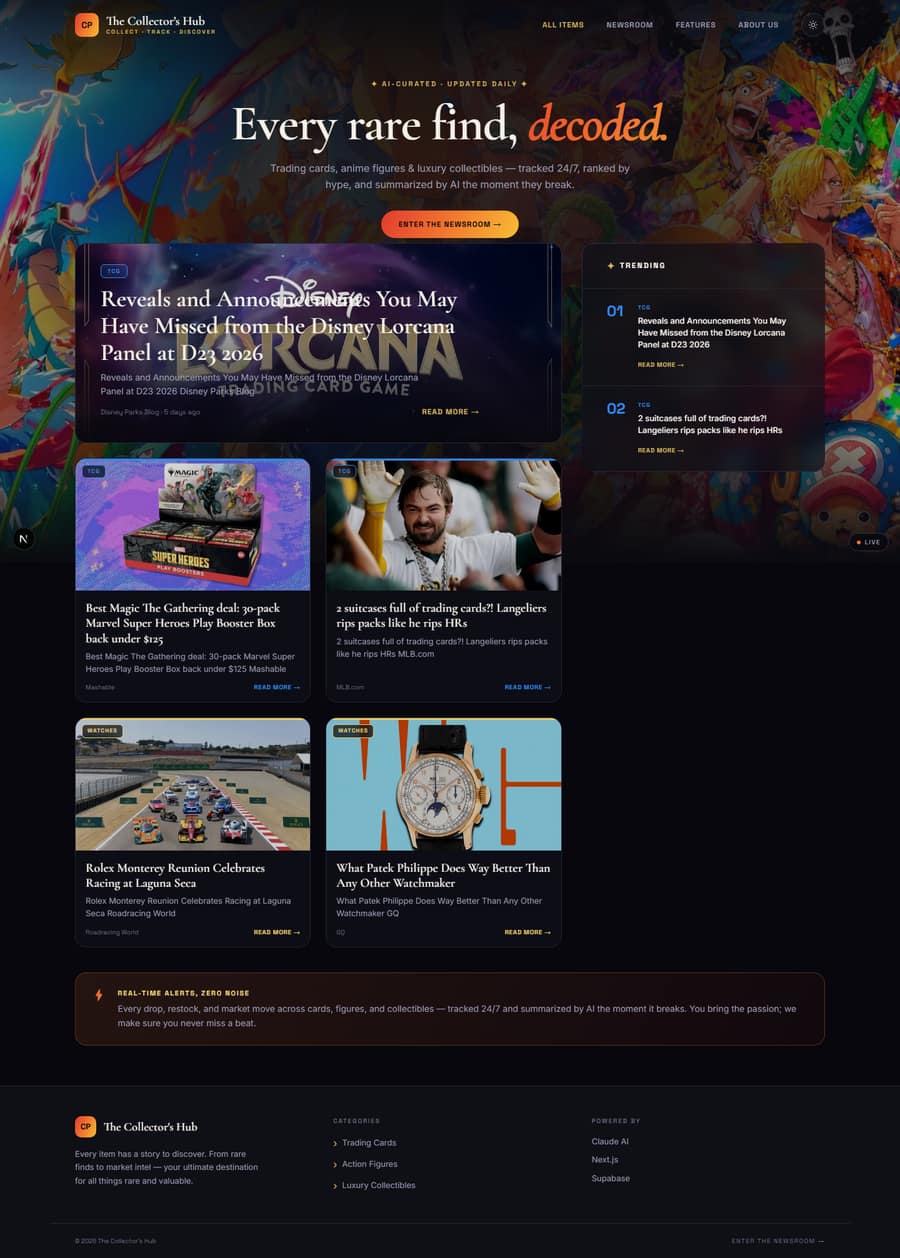
The Collector's Pulse real homepage, full length — 'Every rare find, decoded.' with live trending articles
02SECURITY2607.SEC.02

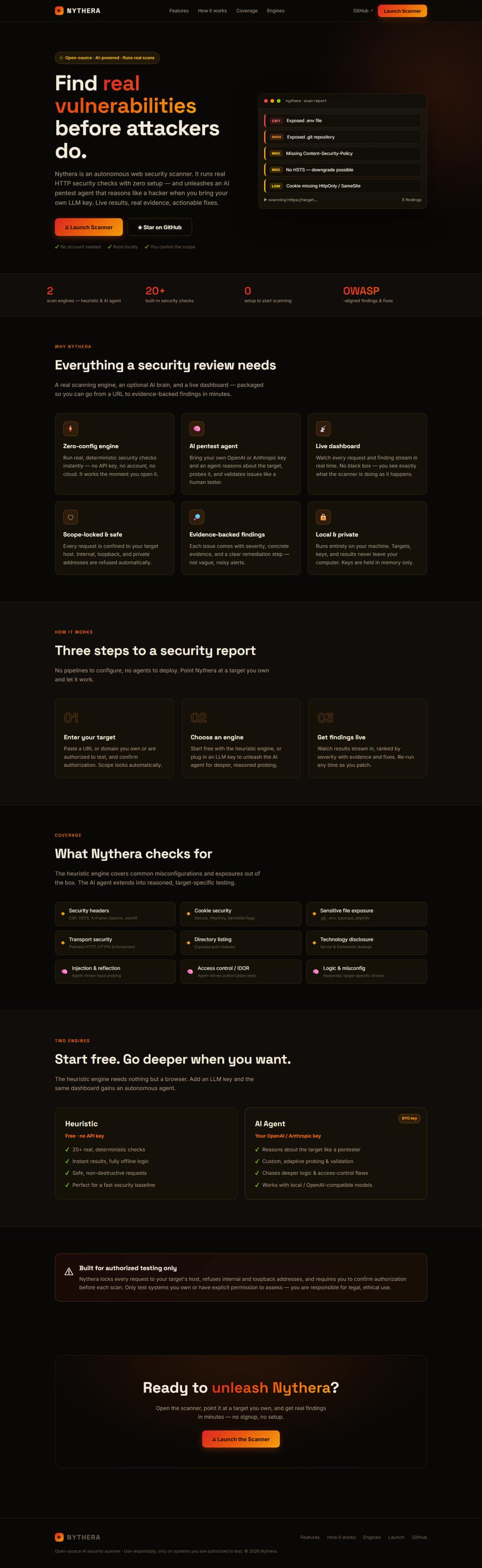
NYTHERA

An autonomous penetration-testing platform that validates every finding before it reports it.

9 Validated vuln. classes7 Workflow phases1 Default-off internal mode
STACKPythonAsync HTTPLLM agent loopDocker
nythera — open-source scanner · localhost:8000scroll ↓ full page
Nythera's real landing page, full length — live scan-report mock showing a critical exposed .env finding
03APPLIED AI2607.AI.03

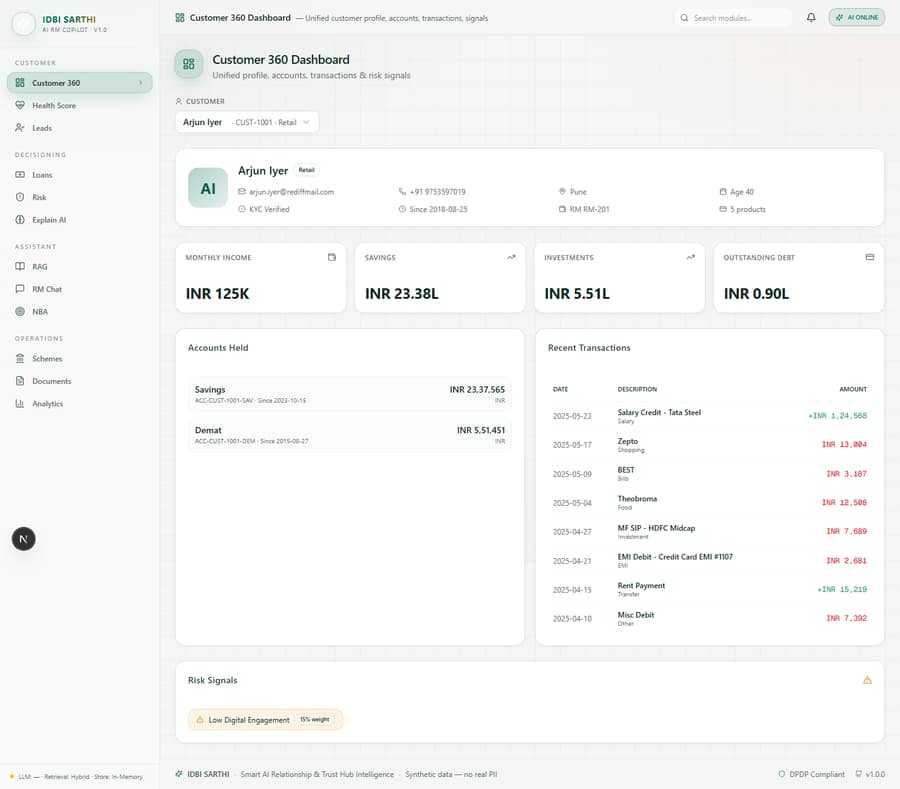
IDBI SARTHI

Production RAG and document intelligence for a bank — then a written audit of its own P0 holes.

P0 Highest self-reported4 Severity tiers17 Library modules
STACKNext.jsTypeScriptPrismaSupabaseGroqGemini
sarthi — AI RM Copilot · Customer 360scroll ↓ full page
IDBI SARTHI's real Customer 360 dashboard, full length, populated with a live synthetic customer record
04SPATIAL2607.SPT.04

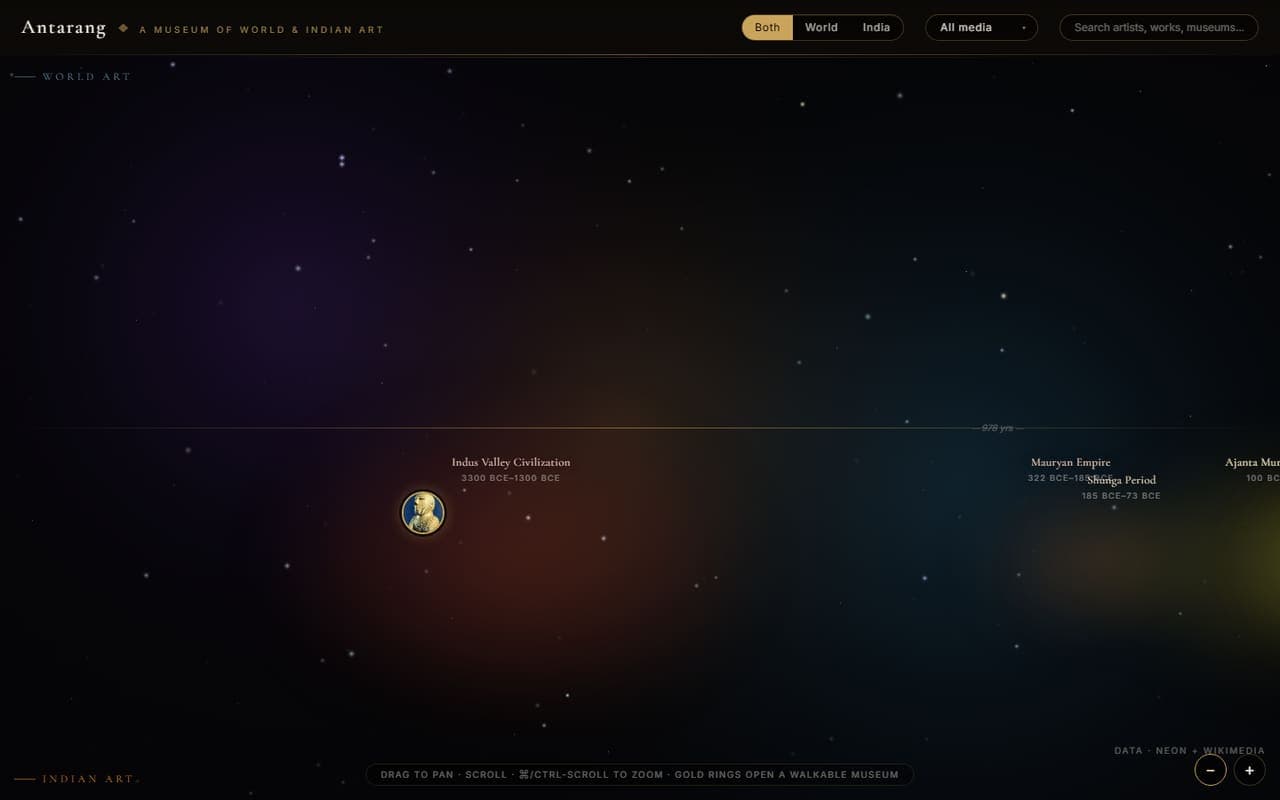
ANTARANG

A walkable 3D museum where Indian art history sits as a first-class citizen on the world timeline.

2 Axes on one timeline60fps Target in-gallery1 Permitted data source
STACKNext.jsReact Three FiberThree.jsDrizzleNeon
antarang — world & indian art timeline
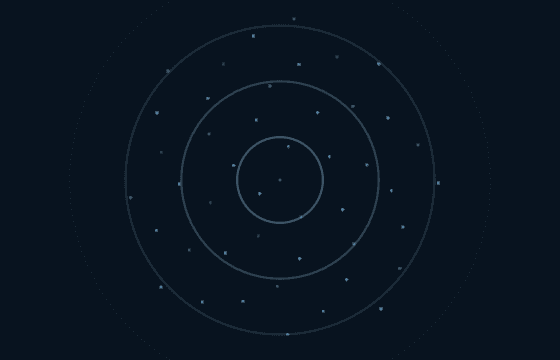
ANTARANG's real dual-axis timeline UI — World Art and Indian Art, gold rings opening a walkable gallery
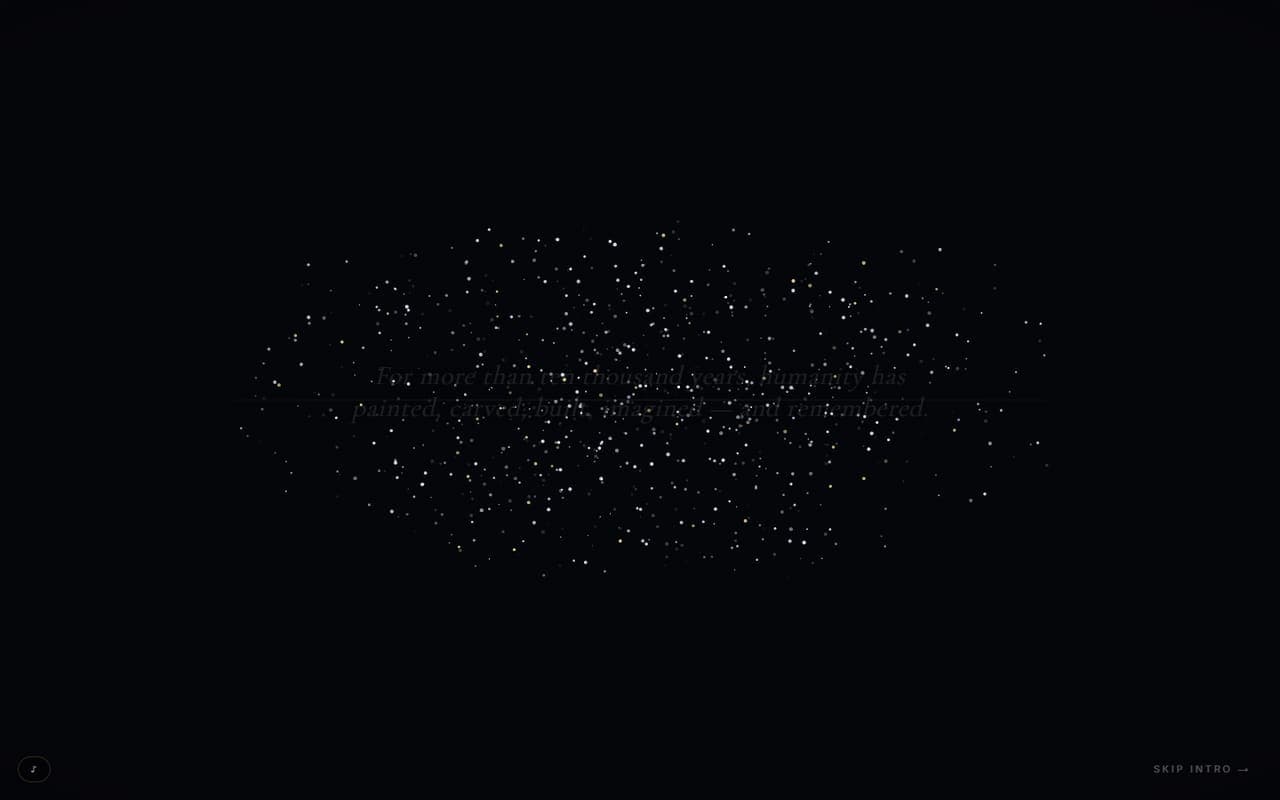
ANTARANG's real particle-field intro screen
05PRODUCT2607.PRD.05

BOOKVERSE AI

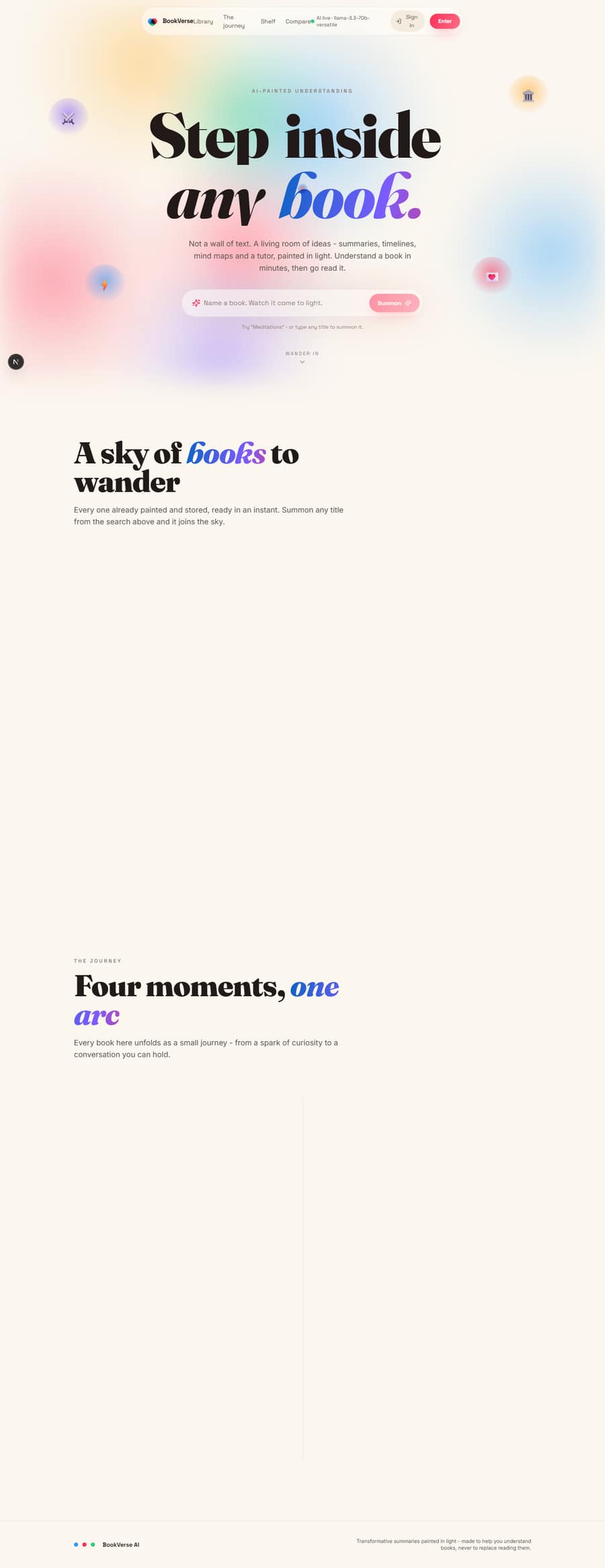
Step inside any book — summaries, timelines, mind maps, character graphs and a grounded AI tutor.

0 API keys required3 Model paths∞ Cache lifetime
STACKNext.js 16ReactTypeScriptTailwindGroqOllama
View repository →
bookverse — step inside any bookscroll ↓ full page
BookVerse AI's real landing page, full length — 'Step inside any book', with its live model badge and Summon search
06SIMULATION2607.SIM.01

THE EVOLUTION

Four physics simulators. One HTML file each. No build step, no dependencies, no network.

4 Simulators5,034 Lines total0 Dependencies
STACKVanilla JSCanvas 2DZero deps
aeon.html — local file · zero depsclick to run live
AEON — weapons-consequence simulator, one of the four THE EVOLUTION simulators▶ Run it live — real canvas, this machine
COSMOS simulator
GENESIS simulator
GENLIFE simulator
07PLATFORM2606.PLT.07

VAULTIQ

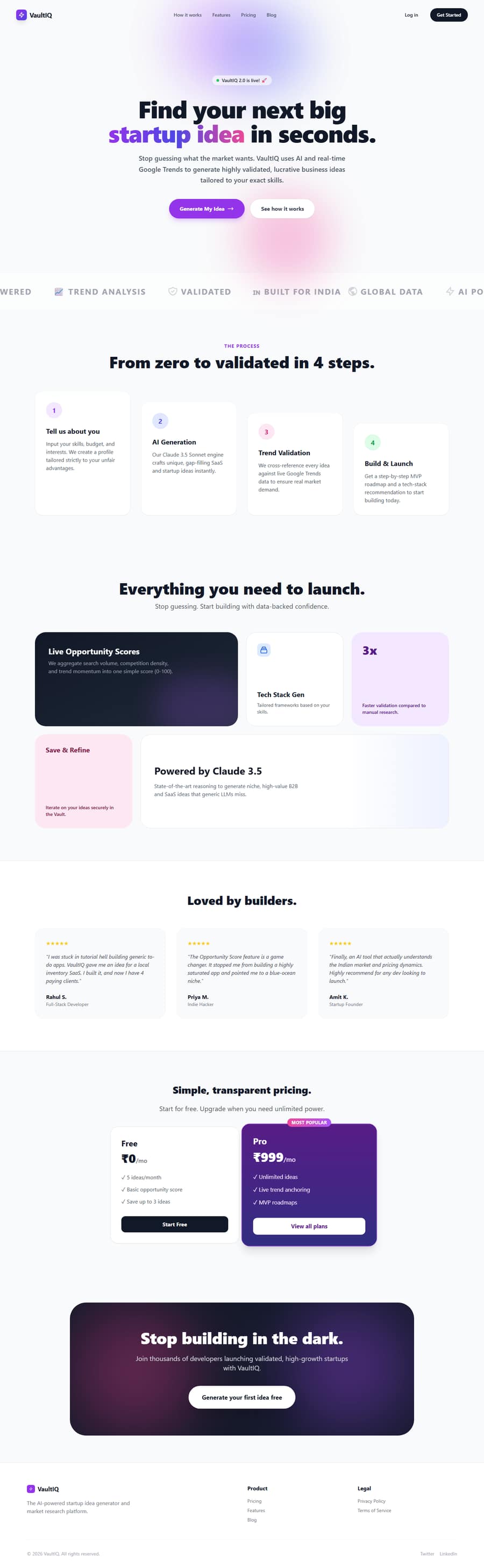
Angular 18 and ASP.NET Core 8 in Clean Architecture — the enterprise half of the range.

4 Clean Arch. layers8 .NET major version18 Angular major version
STACKC#.NET 8Angular 18SignalsEF CoreSQL Server
View repository →
vaultiq — AI startup idea generatorscroll ↓ full page
VaultIQ's real landing page, full length — 'Find your next big startup idea in seconds.'
08VERIFICATION2607.VER.08

HALLOGENAI

An autonomous QA agent that re-verifies reported bugs against live application behavior — never against a commit message.

8 Specialized agents2 Automation platforms0 Guesses allowed
STACKPythonFastAPIPlaywrightPydantic v2SQLAlchemyGroq
Not yet publicResearch case →
hallogenai — verification pipelineevidence, not assumption
Intake→Understand→Automate→Evidence→Report

"Never guess." A bug is marked fixed only when observed application behavior says so — never because a commit exists.

09MOTION2609.MOT.09

REVUELTO: ASSEMBLED

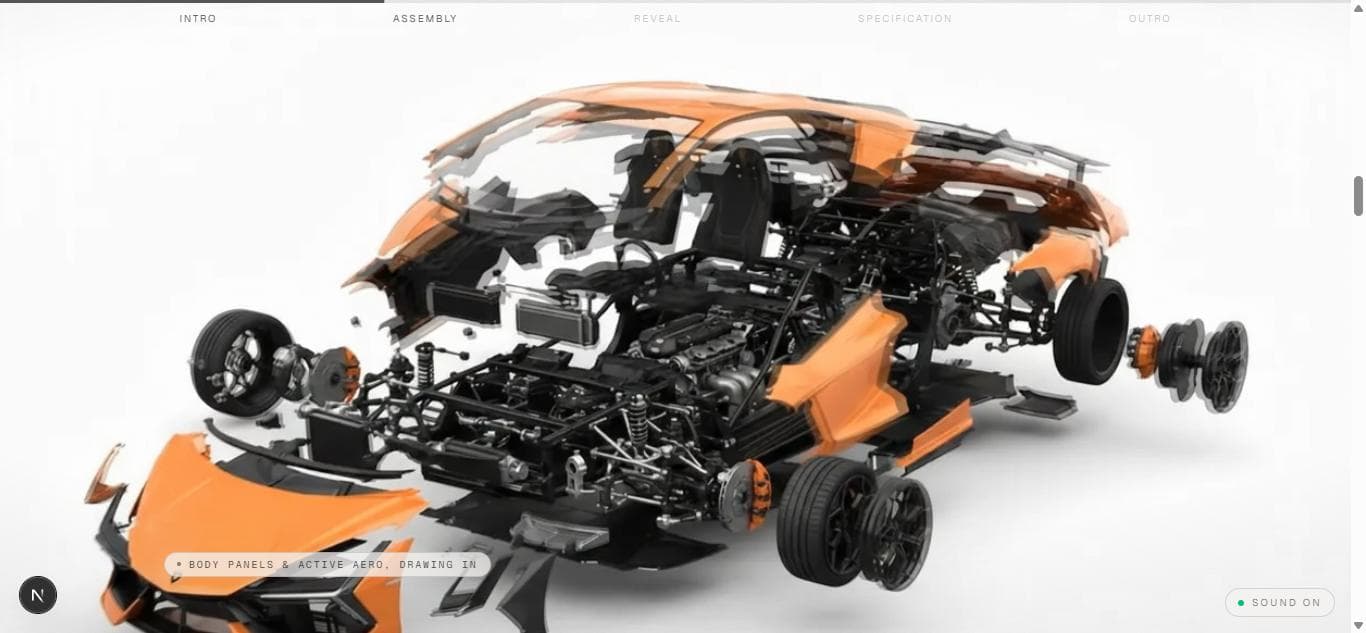
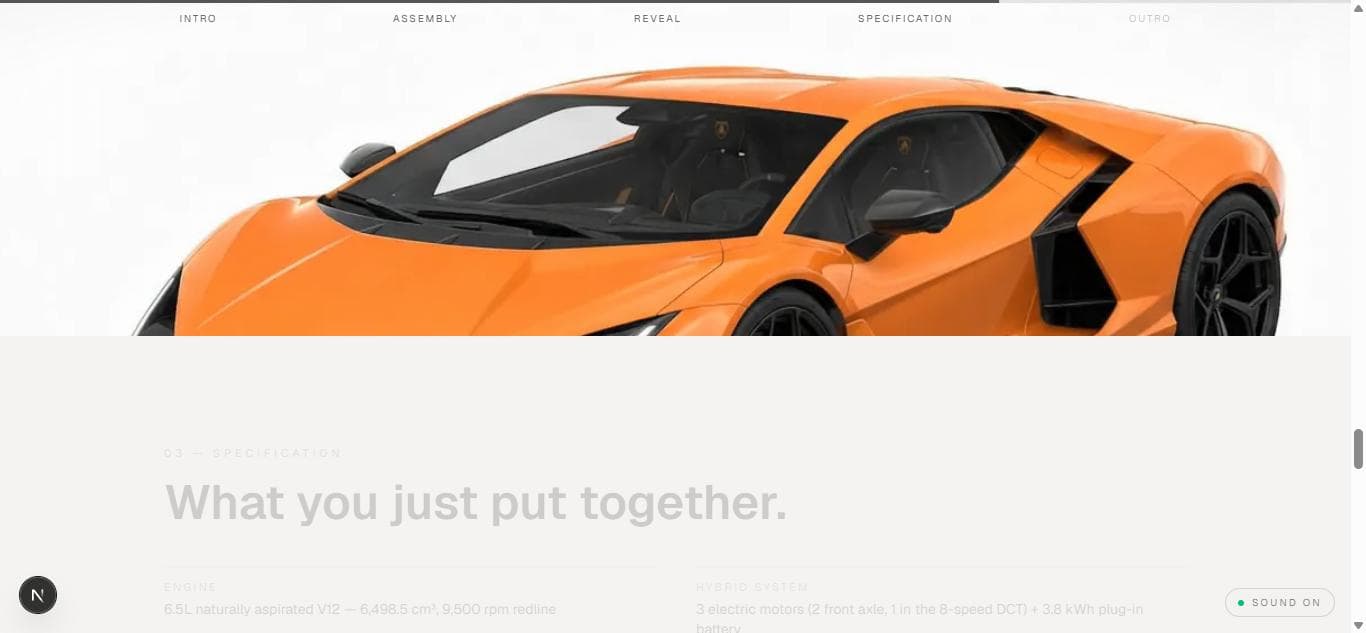
A locked-off clip of a Lamborghini Revuelto, scrubbed frame-by-frame to scroll — scroll down and it assembles itself; scroll up and it comes apart again.

110 WebP frames, scrubbed live5.5MB Total page weight0 Three.js/R3F — dropped for canvas
STACKNext.js 16React 19Canvas 2DLenisGSAPTailwind v4
Not yet public
revuelto — scroll-driven teardownclick to assemble live
Revuelto: Assembled — the reveal beat, 'Back where it belongs,' the fully assembled Lamborghini Revuelto with its 1,001 HP spec chip▶ Scroll it together yourself — opens in a new tab
The intro — the Revuelto fully exploded into its parts, wordmark over itMid-scrub — body panels and active aero drawing in toward the chassisThe specification section — real engine and hybrid-system figures

Research

Ten findings, six case files — every note pinned under the project it came out of, not floating on its own.

CASE 01THE EVOLUTION
2 findings
R-01

Cube-root scaling as the spine of a consequence model

A thousandfold increase in yield multiplies the damage radius by ten, not a thousand — one exponent covers seven orders of magnitude.

R-02

Lagrangian parcels instead of an ellipse

Fallout dose becomes a function of position and time-since-detonation — activity falls ~100× in the first two days (Way–Wigner t^-1.2).

CASE 02NYTHERA
2 findings
R-03

A finding is not a finding until it is confirmed

Every active check needs physical evidence — a DB error signature, a reflected payload, real command output — or it's discarded, not downgraded.

R-04

The dangerous capability is the one you default to off

Internal-network scanning is a separate, explicitly authorized switch, host-locked with include/exclude rules and a rate limiter in front.

CASE 03IDBI SARTHI
2 findings
R-05

Splitting RAG into four modules that can each be wrong alone

Embeddings, vectors, retrieval and generation are separate modules — each stage independently inspectable and replaceable.

R-06

Auditing your own code as the attacker

P0 self-reported: no auth on any endpoint, sequential enumerable IDs — scrapeable with a for-loop. Published, not quietly patched.

CASE 04ANTARANG
2 findings
R-07

A single permitted source, and what to do about copyright

Verified Wikipedia/Wikimedia data only; in-copyright modern artists become biography nodes rather than invented reproductions.

R-08

Jitter is a bigger problem than framerate

A focus raycast throttled to ~10×/s fixed perceived smoothness more than any framerate tuning did.

CASE 05THE COLLECTOR'S PULSE
1 finding
R-09

Writing the design system before the interface

Three marques, three non-overlapping jobs — averaging references produces mud; assigning each a distinct role produces a system.

CASE 06HALLOGENAI
1 finding
R-10

Evidence outranks the commit log

A bug is never marked fixed because code changed or a commit exists — only because its actual behavior in the QA environment, captured as evidence, says so.

Method

How the work gets made — in two acts.

SPEC FIRST
Act I — before the code exists

The discipline

The shape of the thing gets written down first — what it is, what it looks like, where every number came from — so it can be picked up cold by anyone, including a future me.

01

Write the bible before the code

Almost every repository ships a PROJECT_BIBLE.md and HANDOFF.md alongside the source, written to be picked up cold.

PROJECT_BIBLE · HANDOFF · AGENTS · CLAUDE — across 5 repositories
02

Design as a token system, in writing

The visual language gets its own document with named surfaces and roles before a component exists. Reference the token, never hardcode a hex.

DESIGN_SYSTEM.md — every colour tokenised
03

Every number traces to a source

Blast, thermal and fallout curves cite a published model. ANTARANG uses only verified Wikimedia data.

Model tables in README.md
P0 PROVE IT
Act II — after it ships

The scrutiny

Then it gets turned on itself — attacked like an outsider, run without its safety nets, and judged on whether the tool actually fit the job or just felt familiar.

04

Audit your own work like an adversary

IDBI SARTHI ships a full static self-review, graded P0 to P3, most damaging finding written first.

QA_AUDIT.md
05

Degrade honestly

BookVerse runs fully without an API key and says so with a badge. Nythera's internal mode is off by default.

Preview-mode fallback · internal mode default-off
06

Choose the tool for the problem

Vanilla canvas physics. Python security tooling. R3F galleries. Next.js RAG. ASP.NET Clean Architecture. A canvas frame-sequence scrubbed to scroll instead of a video element. The range is deliberate.

7 repositories · TS · JS · Python · C# · WebGL

Philosophy

The philosophy behind every system, workflow and decision above — six operational beliefs, not motivational statements.

01

Intelligence Is Infrastructure

AI stopped being a feature somewhere around the second project in this range. It's the layer other systems get built on top of — the one that turns a document pile into a bank's RAG tool, or nine findings into a research board. The advantage isn't access to a model anymore. It's knowing how to architect around one.

02

Systems Compound

A one-off build stops paying you back the day it ships. A system — modules that specify, tokens that don't drift, numbers that trace to a source — keeps paying you back every time it's reused, extended or audited. Everything in THE RANGE is built to be picked up cold, including by a future version of me.

03

Human Identity Must Survive Automation

The parts of this work a model can't do are the parts worth protecting: deciding what a project is even for, choosing cube-root scaling over an ellipse, knowing which finding to report first. Automation raises the floor. It doesn't replace the judgment call at the top.

04

Craft Still Matters

Execution got faster; taste didn't get automated with it. A spec that's actually legible, a design token that's actually reused, a self-audit that leads with the worst finding instead of burying it — that's the difference between work that reads as considered and work that reads as generated.

05

Speed Is A Creative Advantage

Nine repositories, five languages, one person — because the gap between having an idea and having it running got small enough to stop being a bottleneck. Building fast isn't a shortcut around rigor; the bible and the audit still get written. It's what makes that rigor affordable at this pace.

06

The Operator Evolves

Nobody on this range shipped as "just a developer." Spec-writer, designer, security auditor, systems thinker, and the person deciding where the AI belongs in the loop — all the same person, on the same repository, in the same week. That convergence is the job now, not a side skill.

FAQ

Direct answers to what recruiters, founders and collaborators ask most — who I am, what I've built, and how to work with me.

I'm an AI and full-stack engineer based in Pune, India. I build AI-native systems — RAG pipelines, LLM agent loops, autonomous security tooling — and I've spent about four years as a full-stack developer at RamanByte shipping production .NET, SQL Server and Angular software. This site, THE RANGE, is nine of my repositories stacked into one scroll.

I've built four AI systems where the model is load-bearing, not decorative: IDBI Sarthi, Nythera, HallogenAI and BookVerse AI. IDBI Sarthi is production RAG and document intelligence for a bank, followed by a written audit of its own P0 holes. Nythera is an autonomous penetration-testing platform that validates every finding before it reports it. HallogenAI uses eight specialized agents to re-verify reported bugs against live application behavior. BookVerse AI turns any book into summaries, timelines, mind maps and a grounded tutor — with zero API keys required.

I'm a full-stack developer on Classroom+, RamanByte's learning-management platform. I design the ASP.NET Web API and its SQL Server schema, then build the Angular front end that consumes it. Six of those builds are written up on the Experience page: PIBM's A Journal of Management (live, ISSN 2455-8796), the Classroom+ admin, student and faculty apps, the Dada Udyogini Flutter marketplace apps, and the Vidur Industry Connect admin console.

My stack spans AI-native products (Next.js, TypeScript, Python, LLM APIs) and enterprise software (C#, .NET 8, SQL Server, Angular). For AI-native products: Next.js, React, TypeScript and Tailwind; Python and FastAPI for agents; Groq, Gemini and Ollama for models; Prisma or Drizzle on Supabase and Neon for data. For enterprise work: C# and .NET 8, ASP.NET Web API, EF Core and SQL Server behind Angular 16–18 with RxJS and Signals. Around both: Three.js and React Three Fiber for 3D, Flutter for mobile, and AWS S3, Azure, Redis, SignalR and k6 load testing.

Yes — about four years of production software at RamanByte, plus production RAG built for a bank. At RamanByte my code runs for real institutions: PIBM's journal portal is live on the institution's own domain, and the Classroom+ apps were built for the admins, faculty and students who run on them. The personal repositories are where I push into newer ground: agents, security tooling, 3D and simulation.

I write the specification before the code, then try to break what I built. Before any code exists I write down what the thing is, what it looks like, and what "done" means — every repository on this site ships one. Once it's built, it gets attacked like an outsider, run without its safety nets. IDBI Sarthi's self-published P0 audit and Nythera's validated-only findings are that discipline in practice, not a slide about it.

The model is infrastructure, not a plugin bolted onto a finished product. I design the system assuming a model sits inside the loop from day one — IDBI Sarthi's four-stage RAG pipeline keeps every stage independently inspectable and replaceable, and Nythera checks its own findings through an agent loop before reporting them. The model's output is then reviewed and audited like any other engineer's code.

Five kinds of project, each backed by a shipped repository: security you want proven rather than assumed (Nythera); AI that has to understand documents, not just keyword-search them (IDBI Sarthi, BookVerse AI); 3D experiences on the web that are actually walkable (Antarang); enterprise systems in Clean Architecture built to survive a second client (VaultIQ); and QA where "fixed" is verified against live behavior, not a closed ticket (HallogenAI).

THE RANGE is named for its spread: nine repositories across nine domains, built on one discipline. The domains are editorial, security, applied AI, 3D, product, simulation, enterprise platform, QA verification and motion. It's a scroll-driven stack of running work, each project with its real stack and source link, instead of a grid of screenshots.

Email shreyanshkumarsingh208@gmail.com, or start from the Let's Talk page. The most useful first message covers three things: what's actually broken, what you've already tried, and what "done" looks like. Source code for every project is on GitHub at github.com/gamersinghxx-creator.

Telemetry

The instrument rack.

Languages
TS
TypeScript
JS
JavaScript
Python
C#
C#
SQL
HTML/CSS
Web
N
Next.js (App Router)
React 19
ng
Angular 18 + Signals
Tailwind
FM
Framer Motion
GS
GSAP
LN
Lenis
Radix / shadcn
Applied AI
RAG pipelines
Embeddings + vector retrieval
LLM agent loops
Gq
Groq
Gemini
Ollama
OCR (Tesseract)
Graphics + simulation
React Three Fiber
Three.js
Canvas 2D
Bloom · ACES postprocessing
N-body + particle systems
Backend + data
ASP.NET Core 8
Clean Architecture
Prisma
Drizzle
Supabase
Neon
EF
EF Core
SQL Server
Fa
FastAPI
Pyd
Pydantic v2
SQA
SQLAlchemy
Security
OWASP Top 10
CWE mapping
PTES workflow
Validated exploitation
Auth hardening
Rate limiting